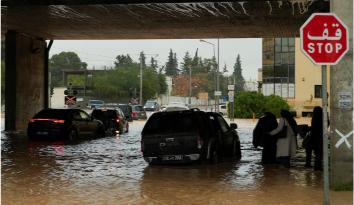
Deadly floods have swept through large parts of Tunisia after days of intense rainfall, leaving at least four people dead and forcing authorities to warn that the toll could rise.
The heavy downpours, described by officials as the worst seen in some areas for more than seven decades, overwhelmed cities and towns, cutting off neighbourhoods and bringing daily life to a halt.
The flooding began on Tuesday and spread across several governorates, hitting both inland and coastal areas of the North African country. Streets were quickly covered by rising water, vehicles were submerged, and emergency services reported serious pressure on already strained infrastructure.
Civil protection teams said floodwaters made many roads impassable, especially in low-lying districts, leaving some communities completely isolated. Rescue workers faced major challenges as rivers overflowed and drainage systems failed to cope with the sudden and intense rainfall.
Authorities said search and rescue efforts were still ongoing and warned that more casualties could be reported as teams reached areas that remained cut off by water. Residents in affected zones were urged to stay indoors as conditions remained unstable.
In the capital, Tunis, schools were shut as a safety measure. Similar closures were ordered in Nabeul, Sousse and Beja, as officials tried to limit movement during the worst of the flooding. Court hearings were also suspended, while public and private transport services were badly disrupted in several areas.
The impact of the floods was widely shared online, with videos showing fast-flowing water racing through neighbourhoods, carrying debris and sweeping cars from the roads. In many places, water levels rose sharply within hours, leaving little time for residents to react.
Along the coast, the situation was worsened by seawater pushing inland. In the town of Menzel Temime, coastal flooding was reported as rainwater combined with rising sea levels, adding to fears for homes close to the shoreline.
Meteorological officials said some regions recorded their highest rainfall levels since 1950, highlighting how rare and severe the weather event was. The scale and speed of the rain caught many communities unprepared.
Several towns and villages were reported to be cut off, forcing families to move to higher ground for safety. Civil protection teams worked to evacuate those trapped, though damaged roads and flooded streets slowed access in some locations.
While Tunisia often experiences seasonal rain, experts say extreme weather events are becoming more frequent. The latest floods come as wider concern grows across North Africa about changing weather patterns, marked by long dry periods followed by sudden and violent storms.
Authorities warned residents to avoid unnecessary travel and to follow safety advice, noting the continued risk of flooding and possible landslides in exposed areas. Emergency services remain on high alert as weather conditions continue to be closely monitored.
In some districts, floodwaters have begun to fall, revealing the extent of the damage. Homes, shops and public buildings were affected, leaving many residents facing clean-up efforts and uncertainty as officials work to assess the full human and economic impact of the disaster.































Comments
Sign in with Google to comment, reply, and like comments.
Continue with Google